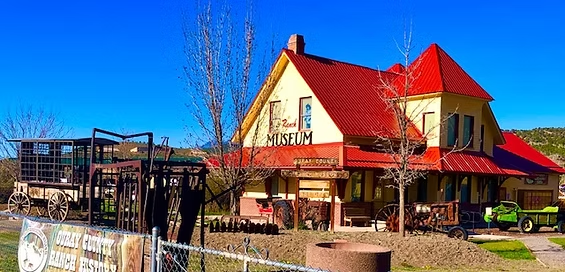
RACC October Member of the Month is the Ouray County Ranch History Museum. Ridgway is surrounded by so much important history and the museum is the center of it all. We interviewed Joan Chismire to learn more.
1). What is your role with the museum and can you tell us a little about the museum's history?
I am the BOD President of the Ouray County Ranch History Museum. The 501c3 museum opened in 2006 after 3 years of interviewing ranching families and creating Ranching History of Ouray County books Vols. 1 & 2.
2). What is one of the top reasons people visit the museum?
Like people would take a double-decker bus to get the flavor and layout of a town, the Ranch History Museum affords people the opportunity to experience the history and fabric of the generations that honed this area with sweat, love, perseverance, and vision as caretakers of the land.
3). Where do museum visitors come from?
Over the summer, we saw visitors from Italy, Japan, Germany, 20 different states from East coast to West, and many locals.
4). Do you think it's important to share the history of this region, and why?
After the Colorado Water Pact decision of 1922, the state met to determine where reservoirs would be located throughout the state as Colorado is an arid state (Reservoirs help sustain water usage into the fall while honoring water rights. Colorado currently has about 1900 reservoirs). For almost forty years, Ridgway's location was slated to be razed and was chosen to be a reservoir site. The town was notified in 1971 that a new reservoir location had been chosen just 4 miles north of town (Ridgway State Park), saving part of the valley and the town. The culture here is one of perseverance. Most importantly the kids (young and old) need to understand and respect the land and where things come from.
Image of the originally proposed reservoir that would have flooded Ridgway:

5). What is your personal favorite story to tell to those who visit?
When "How the West Was Won" was filmed here and around Ridgway in the fall of 1961, locals supplied lodgings and some were extras in the movie. One local young boy rode in a wagon and was filmed falling into the cold waters near what is now Blue Mesa Reservoir. One of the large draft horses brought to be used in the movie took a shine to this young boy and would run to see him at the fairgrounds without fail. The bond became so apparent that the extras and crew from the movie pitched in and collected enough money to buy the horse for the boy at the end of filming.
6). What would you like people to know about the Ouray County Ranch History Museum?
All of the above and so much more! Come and find your favorite treasure(s) in the ranch history museum. One of mine is the unique fireplace with all the different minerals from around this area and collected by the Milt Mitchell family!! And our friend Robert Stouffer identified all the amazing samples for us and is explaining on video (find the dinosaur bones and get a treat).
Visit the OCRHM website here.